
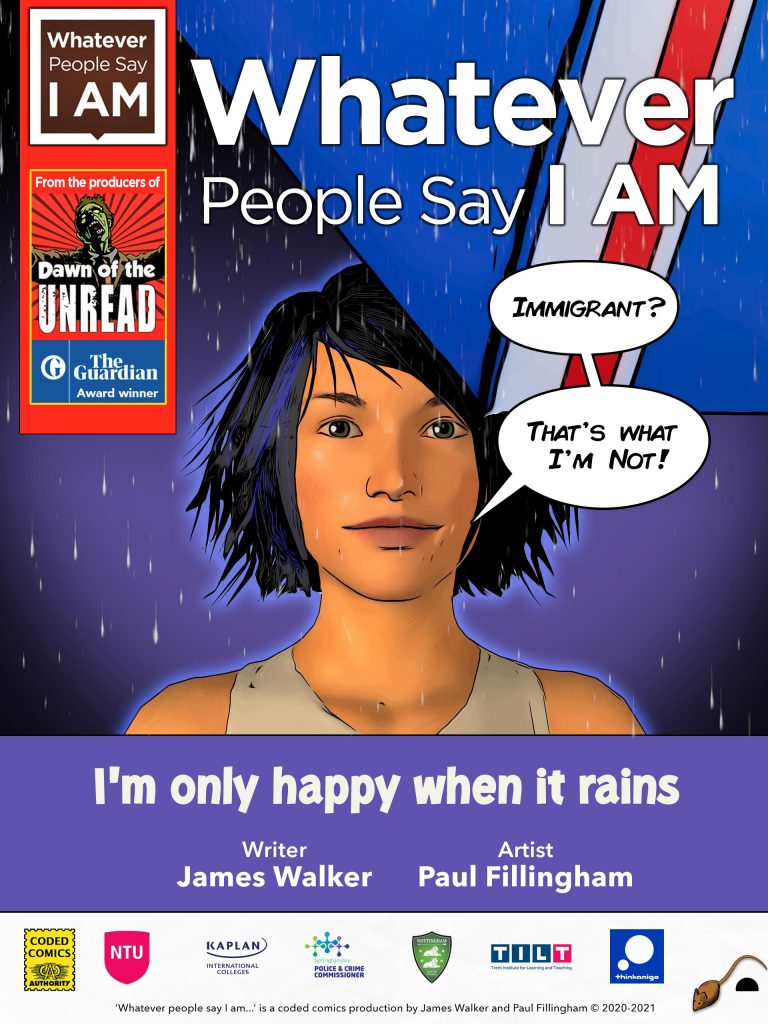
‘I’m Only Happy When it Rains’ is the fourth comic in the Whatever People Say I Am series. It’s aim is simple: To put a human face to statistics and challenge stereotypes. It features a Hungarian migrant I interviewed a couple of years ago as part of the New and Emerging Communities research project with Dr. Loretta Trickett for the Police Crime Commissioner Paddy Tipping.
For the past three years I’ve been working in collaboration with Dr Loretta Trickett of Nottingham Trent University to create two comics that address the issue of new and emerging communities. One key area of her research is barriers faced by migrants and refugees as they integrate into the host country. She is also interested in ways in which understanding of migrant communities can help reduce Hate Crime. These sentiments bode well with Whatever People Say I Am – the follow-on project to Dawn of the Unread. Our other reason for collaboration is to help make academic research more accessible. Often, it’s hidden behind expensive paywalls and read by a privileged few. The comic format allows us to distil the essence of this research and frame it in a format that will reach a broader audience.
This has been a slow process for numerous reasons, the main one being that we have interviewed lots of people to find the best story to address the issues. I originally set out with the intention of featuring Roma people as I think modern life makes it increasingly impossible to live a simple nomadic life and I was eager to represent such issues in a comic. Similarly, the beautiful colours associated with the culture lent itself to visual representation. But as is often the case with research, the focus changes the more people you meet.
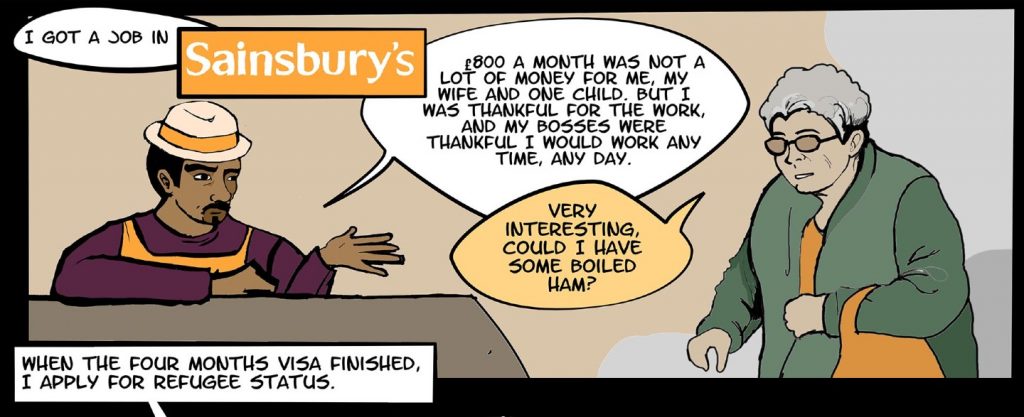
Taken from the Syrian comic ‘What is Coming’
In the end, we featured Syrians in our first of two comics addressing this issue. This made sense as some had settled in Nottingham as part of the Vulnerable Persons Resettlement Scheme – and so we had a strong local link. But this created its own problems, such as which of the 20 or so Syrians we interviewed do we make as the main narrator – particularly given that they all had such incredible back stories. In the end I opted for a teacher called Maamon as through his adult classes we could introduce the lives of some of the other Syrians.
Since then, we have been working on the second comic addressing new and emerging communities. This features a Hungarian migrant who comes to work in Nottingham post-Brexit referendum. I was drawn to this story because it was so positive and features an independent woman with a strong work ethic who has no fear of integration, believing hard work can help you settle anywhere – she had previously worked in other countries too. I won’t give away the premise of the story other than to say it’s called ‘I’m Happy When it Rains’. The weather plays a significant part in the storyline and was also an opportunity for me to give a nod to my adolescence via The Jesus and Mary Chain.
This is the first comic that Paul Fillingham and I have worked on together. It’s been a very slow process because Paul has had to fit this in around his day job (running Think Amigo) as well as teaching himself new skills, such as 3D modelling. But I’m really glad we’ve had this opportunity to properly do something together. We’ve worked together for nearly ten years now, so creating a shared story together is a lovely way to celebrate this.
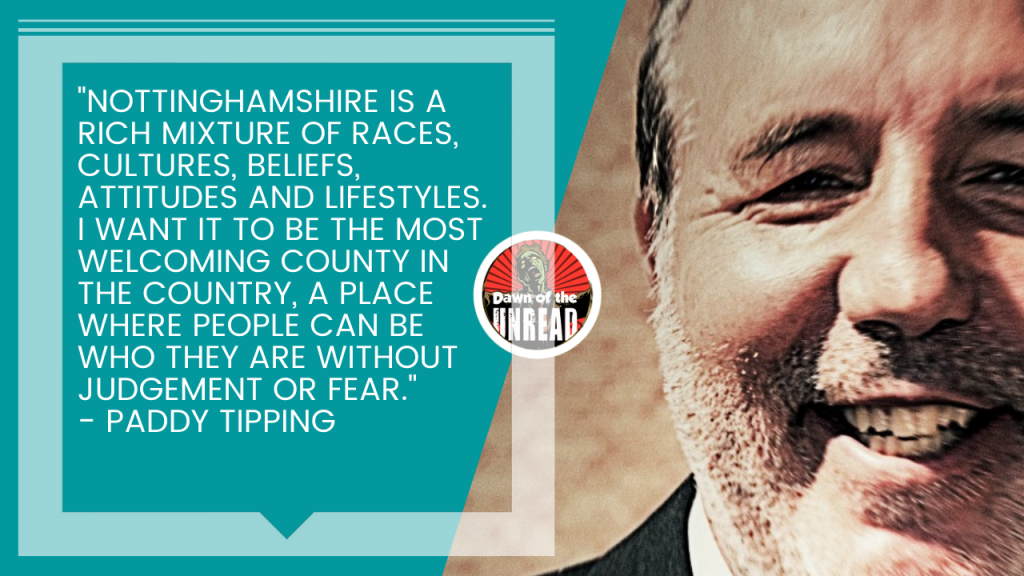
The comics are partly funded by Paddy Tipping, the Police and Crime Commissioner. In an article for the comic, Paddy reflects on his tenure as PCC and said: “Britain is more diverse than ever before. Nottinghamshire is a rich mixture of races, cultures, beliefs, attitudes and lifestyles. I want it to be the most welcoming county in the country, a place where people can be who they are without judgement or fear.”
He is genuinely committed to ending hate crimes of all sorts and recognises the importance of getting this message out in a way that’s befitting of the people and issues it addresses. It’s hoped that we will be able to put printed copies of the comics in public spaces – libraries, community centres, etc to trigger debate and discussion. It will also be used as a resource in schools. The comic will be available on our website by the end of the week.
Until then, the Police and Crime Commission elections are happening up and down the country on 6 May. In Nottingham the candidates are: Paddy Tipping (Labour); Caroline Henry (Conservative); David Watts (Liberal Democrat). Please take the time to research the candidates and vote. We know who we will be voting for…
Dawn of the Unread explored Nottingham’s literary history and was created to raise awareness of low literacy levels in the UK. Whatever People Say I Am is our follow-up project and challenges stereotypes. This blog was originally published on the Dawn of the Unread website here
Further reading
- Electoral Commission website (electoralcommission.org.uk)
- ‘Candidates revealed for one of the top jobs at Nottinghamshire Police’ Evening Post
- What is Coming’ – Comic addressing Syrian refuges (whateverpeoplesayIam.co.uk)
- The Sailor – a first person account of fleeing Syrian (whateverpeoplesayiam.co.uk)
- Tipping Point: Paddy Tipping Reflects on Life as PCC (whateverpeoplesayiam.co.uk)
- The Effects of Brexit on New and Emerging Communities (whateverpeoplesayiam.co.uk)
- Building a Better World Through Comics (nottinghamcityofliterature.com)