About James

James specialises in digital literary heritage projects. He spends most of his time in front of a computer screen writing about life instead of living it. Therefore, do not trust a word he says.

Cappuchaino

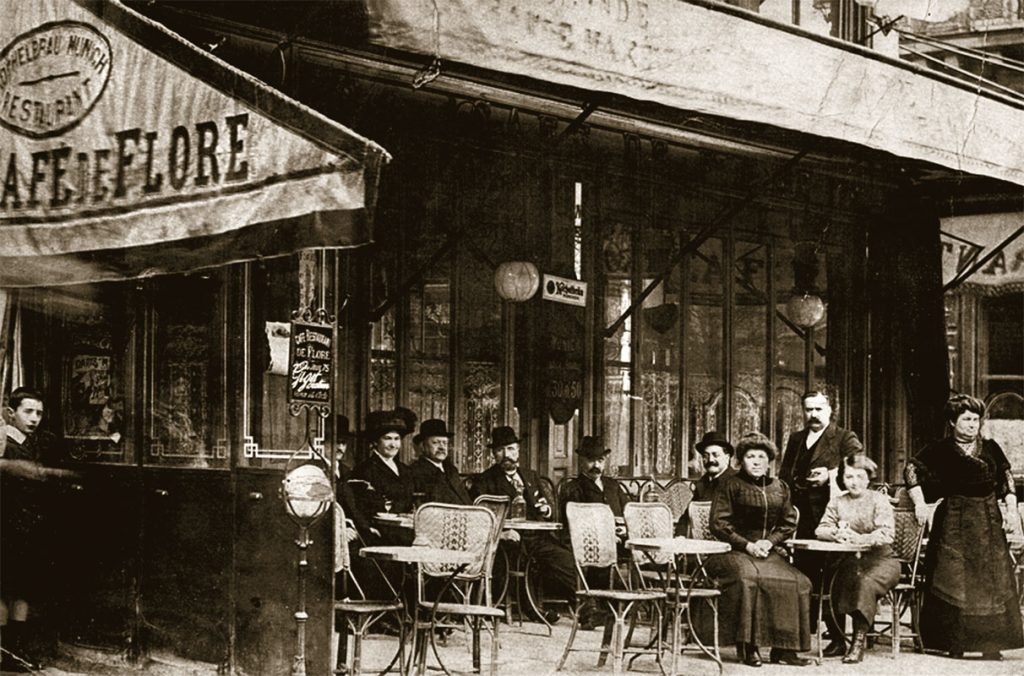
Cafe de Flore c. 1900. Image wikipedia.

Recently I met Jay Shah, the owner of a Coffee and Tea House on Carrington Street called Cappuchaino. She’s hoping the space will be used for roundtable discussions, spoken word performances, music events, festivals and other cultural activities that will draw in the local community. Cappuchaino has a diverse menu that caters for vegetarians, vegan, gluton free and halal. Where possible everything is sourced locally so there’s no need to worry about whether your sarnie was shipped in from Derby.

She’s an ambitious woman and a welcome (returning) face to Nottingham after spending eight years or so in Jack Straw’s constituency of Blackburn. Blackburn has received much negative publicity about its racial divide, famously captured by an estate agent on BBC’s Panorama who declared in 28 years of working in Blackburn he’d never sold a house in an Asian area to a white person. Although Nottingham has had its fair share of problems in the past it’s generally very tolerant and well integrated. Traditionally a factory city, Nottnum has never been dominated by one industry which has meant a diverse range of employment and with it a more varied outlook, albeit one that is united in its contempt for authority. This is fertile ground for her ambitions.

Nottingham has an incredible arts scene. We’re absolutely spoilt for choice when it comes to galleries, gigs and literature events. There’s a thriving DIY culture as well that sees a new event or business pop up on a weekly basis. So Cappuchaino has come to the right city. But with all of this creativity being shoehorned into the Creative Quarter, will people venture to a location on the periphery of the city?

Being close to the train station could be an advantage in picking up footfall, especially as our tourism figures are strong. According to figures produced by STEAM 2010 tourism to the city is valued at £466.4million and 1.38 billion countywide. Of this, 27.5% is spent on food and drink. Hopkinson’s is near by – easily my favourite location in Nottingham – so there is the potential to tap into this bohemian market that sounds very much like her target audience.

So what’s Cappuchaino like as a venue? It’s set over two floors and is a great performance space as all of the drinks are made upstairs (so you don’t get put-off mid-flow by a steaming coffee machine). They’ve got TV screens, meaning you can experiment with visuals or do a joint reading via Skype. At present, though, it looks too much like a chain to capture the vibe of a Café de Flore or Les Deux Magots. But this isn’t an issue as creating the right ambiance is easy: Switch off the lights, put candles on the tables, make sure none of your furniture matches, and regularly rotate artwork on the wall. They have wisely invested in a movable stage as well meaning the room can be tailored for your specific needs.

Jay is hoping to host her first Mushaira (urdu poetry) event for Nottingham City residents before the end of this year and is keen to speak to potential partners and planners who can offer support or advice. She is also keen to offer something additional to live events, so there’s possibilities for the pampering industries: henna tattooists, manicurists, masseurs, etc as well as local businesses with something relevant to flog. Bottom line: get in touch and make suggestions.

The recession has shattered the cultural landscape and reduced large funding for organisations. Very much like a jigsaw puzzle, it’s now a case of finding matching parts and recreating the image. Taking advantage of free rental space could be a useful platform for a new event without a budget. Drawing creative and complementary businesses into the equation offers the potential of shared revenue as well as a more dynamic event than your usual ‘gig’. So if you’re interested, Nottingham. Swing by and say hello to Cappuchaino and let us know how you got on.

Cappuchaino Coffee and Tea House  44 Carrington Street Nottingham NG17FG www.cappuchaino.com .
 

Kick-starting your writing project

setup

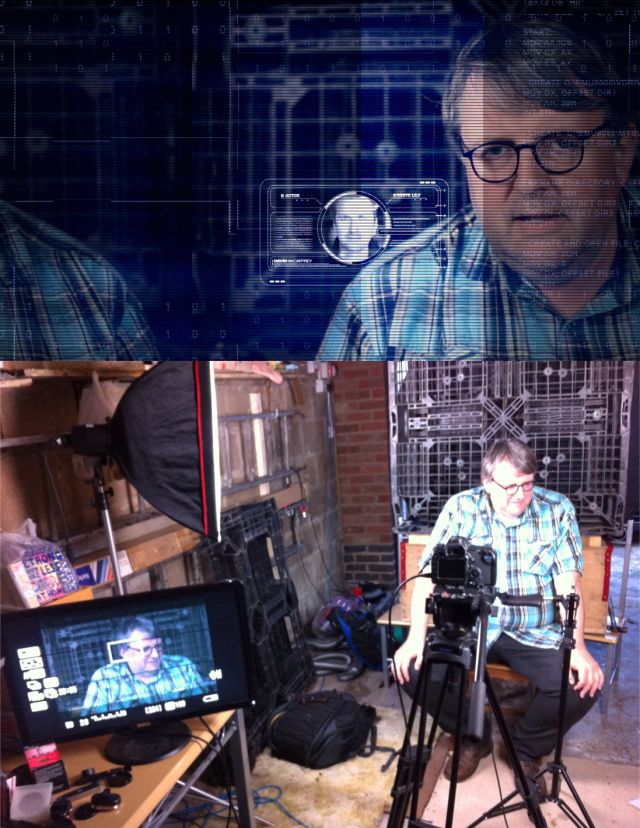
Adrian Reynolds successfully raised funds for White Lily through Kickstarter. Image from Kickstarted campaign.

Once upon a time there was a world full of generous benefactors who would happily fund an entire project. All you had to do was write a hand-written letter or fill out a small form and a lorry would deliver bundles of coins to your doorstep. Then the world changed. The rich benefactors fell off a mystical ledge known as the fiscal cliff and the pages of arts council forms multiplied faster than bacteria. The money dried up, people sat at home getting depressed and then the internet came up with a solution.

Crowdsourcing is one of the most viable means of funding a project. The formula is simple: no forms. You tell people about a project you want to do and then they pledge small donations of support which can range from £5 to £5million. Essentially this isn’t a new idea. It’s the old subscription model that funded writers like Whitman and Twain with a digital twist and a global reach. There’s loads of these sprouting up but I want to concentrate on one in particular, Kickstarter. Since Kickstarter’s launch in 2009 over 5 million people have pledged $826 million to fund 50,000 creative projects. The only problem is this is a shit or bust venture e.g. If you don’t raise your targeted amount in the allotted time you lose the lot.

Kickstarter has a 44% success rate. This means the other 56% of people were either unrealistic with how much they wanted to raise, their campaigns were poorly marketed or the great technocracy simply didn’t like what was on offer. But it certainly seems to work for certain art forms.

In 2012 there were 1,170 comics projects launched of which 542 were successful. An intriguing article in Publisher’s Weekly suggested that Kickstarter is the second largest independent publisher of graphic novels based on revenue. These figures are calculated on the percentage that goes directly to the project in comparison to say the split with a publisher. Take cartoonist Rich Burlew. He originally hoped to raise $57,500 to reprint out-of-print books collected from his “Order of the Stick” webcomic. Incredibly, he became the third person to raise over $1 million. At this point half of the readers of this blog have migrated to a crowdsourcing website. Good luck.

For those of you who still have an attention span and are prepared to trawl through the remainder of this article, here’s a few tips on how to conduct a successful campaign. I’m going to use Adrian Reynold and Tristan Ofield’s Kickstarter campaign White Lily as an example as this article is partly inspired by a recent talk Adrian gave at the Nottingham Writers’ Studio as part of Memories of the Future.

Preperation: Befriend anyone and everyone on Twitter and Facebook so that you have a bigger following than the latest football club to be bought by a rich oligarch. This means that when you start to ask for money, you have more people to spam than your family and uni mates. (please note: I’m a semi-purist and don’t adopt this technique. I only befriend everyone related to my interest/specialism)

Wit: Just because you can type doesn’t make you a writer. Get someone in who knows what they’re doing. People are more likely to hand over cash when you make them smile. In White Lily a £5 pledge gets you: “Instant Karma. You’re assured a place in our hearts, along with a financial credit on IMBD.” That’s shorthand for nada.

Goodies: People are kind but you’re more likely to get money out of them if you offer something desirable. This is why graphic novels do so well. A £15 donation gets you a comic that otherwise would have sold for £5. It’s like a shop with a high mark-up with the money going to an imaginary best friend.

Vanity: For enticing higher bidders you need to offer something special. If you’re doing a film, maybe someone can have a walk on part. Perhaps one of the artists on the project will create a unique signed one-off print, etc.

The magic key: 10% of films funded at Sundance in 2012 were funded through Kickstarter. Lots of producers will now pledge cash because they want to find the next best thing. That DVD you’re lobbing their way could lead to a big contract. That comic you’ve just drawn might get snapped up by DC. As much as this project is about raising money it’s also about raising your profile.

There’s loads more tips but you’ve got to do a bit of work yourself, like thinking of how you’re going to schedule content, who’s going to appear in that short sharp one minute video and most importantly, what it is that you need the money for.