Readers’ Day: ‘Why bother with the Booker?’

What better way to spend a Saturday than in a sea of grey hair at Readers’ Day. This was my second appearance at what is my favourite day in the literary calendar. This year it was held at County Hall, West Bridgeford, which although not as opulent as the Council House (where it was hosted last year) had an equal amount of male portraits mounted along the staircase. But they soon became the minority when the building flooded with females. Judging by this, men must be allergic to books.

My talk was ‘Why bother with the Booker?’ and was co-presented with Sheelagh Gallagher. We had initially planned to put forward arguments for and against but in the end decided to see how things turned out on the day. But I didn’t leave things purely to chance and came armed with numerous facts and quotes to test out the audience and interject where appropriate. Did they know the shortlisted books are specially bound to reflect the themes of the book? That sales of novels are up 127% year-on-year, that 13,000 copies were distributed to students beginning university this term, that Year 13 pupils were able to down their iPods and read the entire shortlist as part of an academic assignment? And talking of technology, you can now download a Booker App with a whole arsenal of bookish delights. Take that, ladies.

The talk couldn’t have come at a more appropriate time what with the various scandals surrounding this year’s prize. We have the conspiracists claiming the only reason a western and a thriller got in was to ensure Julian Barnes made it fourth time lucky with the ‘posh bingo.’ The purists have been so outraged at the ‘readability’ of the shortlist – which seems an oxymoron given that the basic test of any book is inspiring the reader to turn the next page – that they’re (headed by literary agent Andrew Kidd) setting up The Literature Prize to bring back ‘quality and ambition’. And all, I imagine, because Tom McCarthy didn’t take the honours last year with C and this year they dared to leave off Alan Hollinghurst. Barnes must be wondering what he’s done wrong. Perhaps Rupert Murdoch can recoup the losses from the NOTW scandal and buy the rights to film literature’s very own Champions League.

Then of course there is the Not the Booker, for the literary subcultures that think they know better. But even this has not passed without scandal. The Dead Beat by Cody James was withdrawn by her publisher because of clique attacks on the Guardian hosted forums. He said, ‘I misjudged the mood of these forums, their willingness to meet dialogue with dialogue, to accept differences, and most of all to talk about the book rather than sniping at the author or readers. As a result I have exposed her to comments that no author deserves to have levelled at them.’

This is why I love the Booker: The endless conversations it creates, the tantrums and offence. I can’t get enough, so this year – as far as dialogue is concerned – it’s been my favourite to date. It saw two debut novelists as well in Stephen Kelman and A D Miller. My top three books this year are The Silent Land (which is being made into a film and is just as beautiful a story of grief and reflection as A Sense of an Ending – but the wrong genre) Too Much Happiness (winner of the International Booker 2009) and The Tiger’s Wife (winner of the Orange Prize 2011) – so these prizes must be doing something right. But at the end of the day, the best books come from people you trust. This can be dangerous in that you can potentially limit your horizons by staying with the familiar, but it’s never failed me. So choose those friends wisely. I found a new friend that day in Carol Hodgkinson who recommended the following: The Book Club Bible: The Definitive Guide That Every Books Club Member Needs, 2007, Michael O’Mara Books Ltd.

Robin Lewis reviews Readers’ Day in LeftLion.
Could another tiger gobble up a prize?

I fell in love with the Booker thanks to Sheelagh Gallagher at Arnold Library. Last year she asked me to be on a panel to discuss the prize and I put forward the case for The Finkler Question. The event triggered my (selective) obsessive personality as I wanted to read as many of the shortlisted books as possible to ensure I was right about my choice before putting my neck on the block. Without being involved in that event, I’d never have taken the time to consider the other nominees and like many, would only have read the winner.

Last night I went to an event at Wollaton library organised by Jane Brierley to discuss this year’s shortlist. The audience was comprised of local reading groups – although anyone was welcome. It never fails to amaze how few men attend such events which seems perverse given that men dominate the shortlist by a ratio of 3:1 for the second year on the trot.

The Booker started in 1969 and so far has seen 14 victories out of 40 for female authors. (I’m not including Nadine Gordimer in 1974 as she shared the honours with Stanley Middleton) . They are: Bernice Rubens (1970), Ruth Prawer Jhabvaia (1975), Iris Murdoch (1978), Penelope Fitzgerald (1979), Anita Brookner (1984), Keri Hulme (1985), Penelope Lively (1987) A.S.Byatt (1990), Pat Barker (1995), Arundhati Roy (1997), Margaret Atwood (2000), Kiran Desai (2006), Anne Enright (2007) and Hilary Mantel (2009). I find this utterly perplexing given that more women read then men and that the average reader is in their fifties – which was clearly the case here at Wollaton library tonight.

This blog isn’t about gendered politics, though. It’s about how local libraries have helped flame my love of this prize which in turn has led to numerous obsessive researches. My observations of the Wollaton event are as follows:

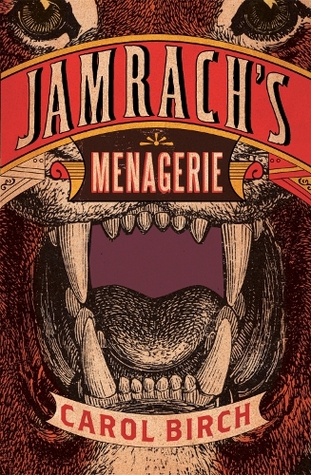
1) Book covers are very important to readers. For this particular audience, The Sisters Brothers by Patrick deWitt was off putting because the silhouette of two gunslingers in front of a moon looked like a skull! I’m sure this would delight the elitists out there who have become so repulsed at the thought of a Western on the shortlist they want to break off and have a ‘proper’ literature prize. These are the kind of people who still haven’t recovered from D B C Pierre’s ‘trailer park trash’ comedy winning in 2003. But if book covers are important, what about book titles? Jamrach’s Menagerie is pure magic. Don’t we all want to be transported somewhere like this when we turn the page?

2) Guilt. A lot of people felt Julian Barnes would win simply because he was a ‘name’ and that this time it would be fourth time lucky. For many, it was another Finkler. Clever, well written, but ultimately not something they fell in love with.

3) Context. Pigeon English is easily the most culturally relevant given our fears about gang culture (although A D Miller’s Snowdrop does a damn good job exposing Putin’s Moscow). But should this be a defining criteria because it’s the zeitgeist? Stephen Kelman’s Pigeon English has been compared to Mark Haddon’s Curious Incident but can a book told from an eleven-year-olds perspective impress the adults? It did in 1993 when Roddy Doyle took the prize for Paddy Clarke. Definitely worth a few bob, I reckon.

4) Last but not least, can a tiger win it again? Jamrach’s Menagerie was easily the favourite of this particular audience and won by a landslide vote (which could have as much to do with the passage selected as by the person reading it out). But we’ve had a tiger in The Life of Pi (2002) and Téa Obreht has just won the Orange Prize for The Tiger’s Wife (my book of the year). Could this really influence decision making? I guess we’ll find out on Tuesday 18 October. Roarrrrr.

Man Booker Prize website

Nottingham Libraries events