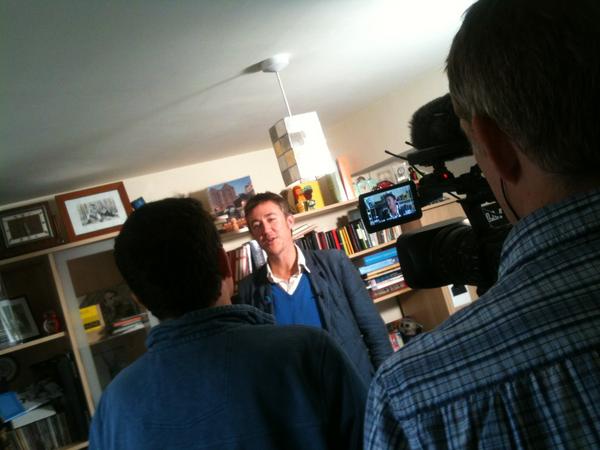
Filming for Inside Out. Photo Paul Fillingham.
Who would have thought that 27 October would turn out to be so ridiculously busy? It’s the final day of Games City which dominates the Market Square, the Council are holding a Robin Hood pageant, it’s the end of half term so loads of people are returning back from holiday, and it’s also the last Saturday before Halloween and so everyone has decided to dress up as Meg and Mog. There’s also a massive free music event across the city and the ‘thrill of waiting up for the end of the world‘ celebrations featuring loads of artists, writers and film makers. Oh yeah, and it’s also the last day of The Loneliness of the Long Distance Runner at the Playhouse. Bugger.
Putting on an event is awful. It’s non stop stress as you worry about whether people will turn up or not. Judging by our sales so far it’s not going to be as many as we would like. Our overheads are around £600 but fortunately this has been funded through the budget for The Space as it’s the launch of our Sillitoe Trail. Considering we’re a voluntary organisation trying to raise funds it would be a disaster not to make money on our biggest event which falls every two years.
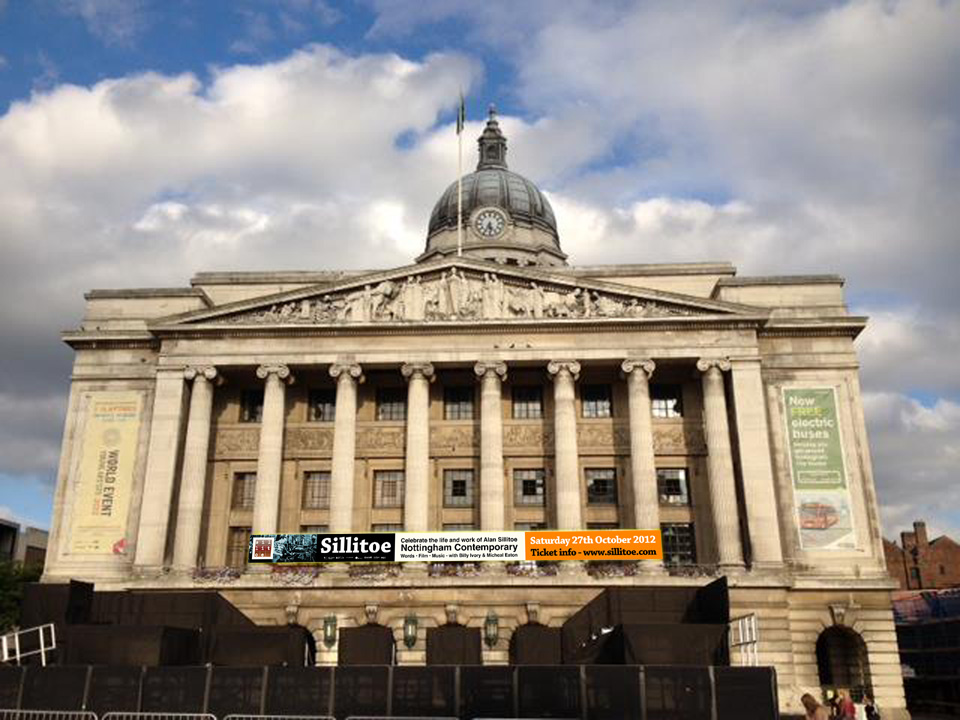
Look what you could have won. Photo James Walker.
We had to go for 27 October because it was the latest date in the month we could book. This was so we had maximum time to finish off the Sillitoe Trail for The Space which includes a Mobile App, a free downloadable book and a hard copy of the book. My concentration should have been solely on The Space and finishing off the project but Sillitoe Day has been dominating my waking hours (of which there has been many).
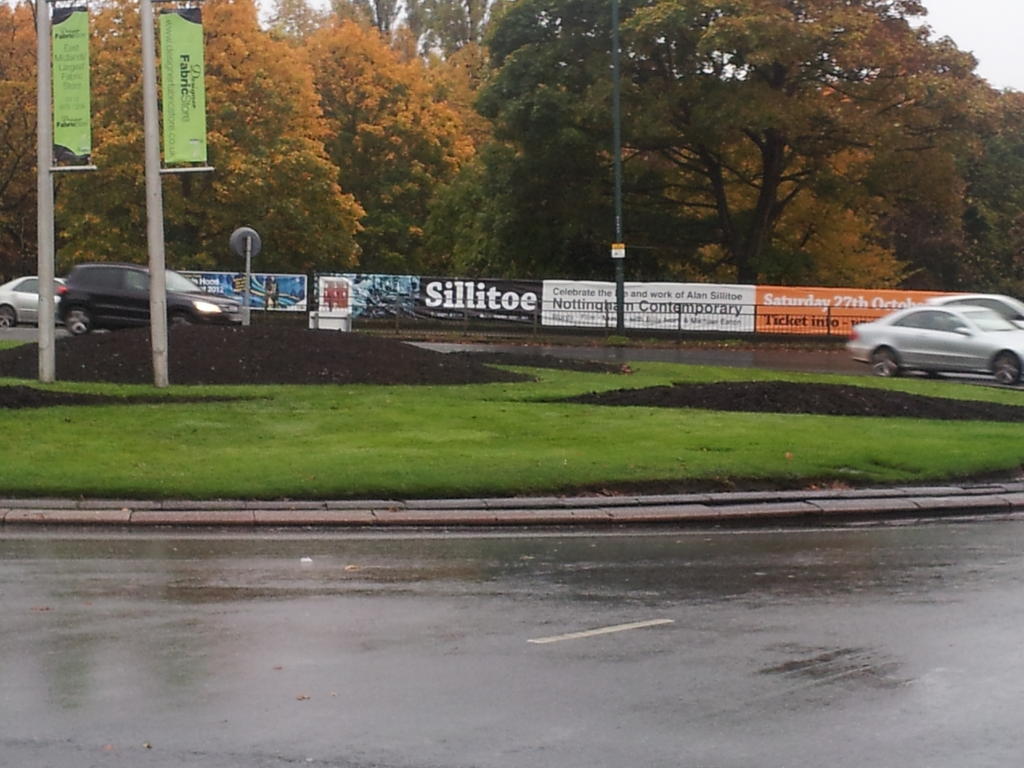
Goose Fair Island. Photo James Walker.
I emailed 300 people offering free review tickets to bloggers etc in search of some online coverage. I got three responses. We had a 21m banner printed to go on the top of the Council House but someone put up the Christmas decorations early and so it couldn’t be affixed. We found a compromise at Goose Fair Island which has turned out to be an excellent location.
The BBC came and tested out the App this morning and will feature a ten minute documentary on Monday 29 October (Inside Out), although it would have helped to have had this in advance to promote the actual day. David Sillitoe went for a natter with John Holmes on Sunday and Paul Fillingham and David Sillitoe were guests on Trent Sound on Saturday 13 October (I was at home tweeting links at the same time to give context and further information to their discussions as they have a live twitter feed on their website). As far as local press goes, The Evening Post ran a feature with Mark Shotter and David Sillitoe and LeftLion has had numerous articles filtered through with MulletProofpoet (who’s hosting Sillitoe Evening) Frank Abbott (who’s done a mash-up of SNASM) and a big feature on Sillitoe Day on the homepage for the last week – in addition to a full page advert in the latest magazine.
The Arts Council featured us on their homepage as did the City Council. The Nottingham Playhouse put a poster in every one of their #LDR2012 programmes which was incredibly helpful. We contacted every college, local universities and creative writing programmes in the region and offered discounted tickets to students.
 The event could have been marketed better by filtering through press releases on a monthly basis to build up awareness of the event rather than the last minute bombardment. The website has also been a big letdown, with ticket sales only available from mid-September and also through the design. It is poorly constructed and therefore important content does not stand out. This was resolved with a banner add after endless requests.
Then there is the greed of the ticket issuer Gigantic who charge an extra £3.50 for an admin charge and posting out the tickets. This makes us look as bad as Ryan Air, and will no doubt have infuriated some potential buyers. What really annoys me is that they don’t offer the option of collecting tickets on the day to avoid such hidden extras. The devil is in the detail and this is something which we should have checked out.
The one real positive has been progress made via Twitter. It’s a superb resource and I’ve been able to meet so many new people and share relevant content. I like it so much that I turned my back on Facebook a month ago, which in hindsight was not a good idea as it offered another form of social presence. But I feel much better for it.
I don’t like putting on events because I hate pressurising people to attend. I also hate this worry the night before and I don’t particularly like talking at such events, I much prefer being in the audience. But there’s nothing more that can be done now than ensure that everything goes to plan. Talking of which, I better start writing one.
Sillitoe Day 27 October, Nottingham Contemporary. Tickets available on the door. £10/£5 concessions. The price includes a free book, six months hard graft and snippets of culture.