
About James

James specialises in digital literary heritage projects. He spends most of his time in front of a computer screen writing about life instead of living it. Therefore, do not trust a word he says.

Podcast: Mansfield is a Town in North Nottinghamshire

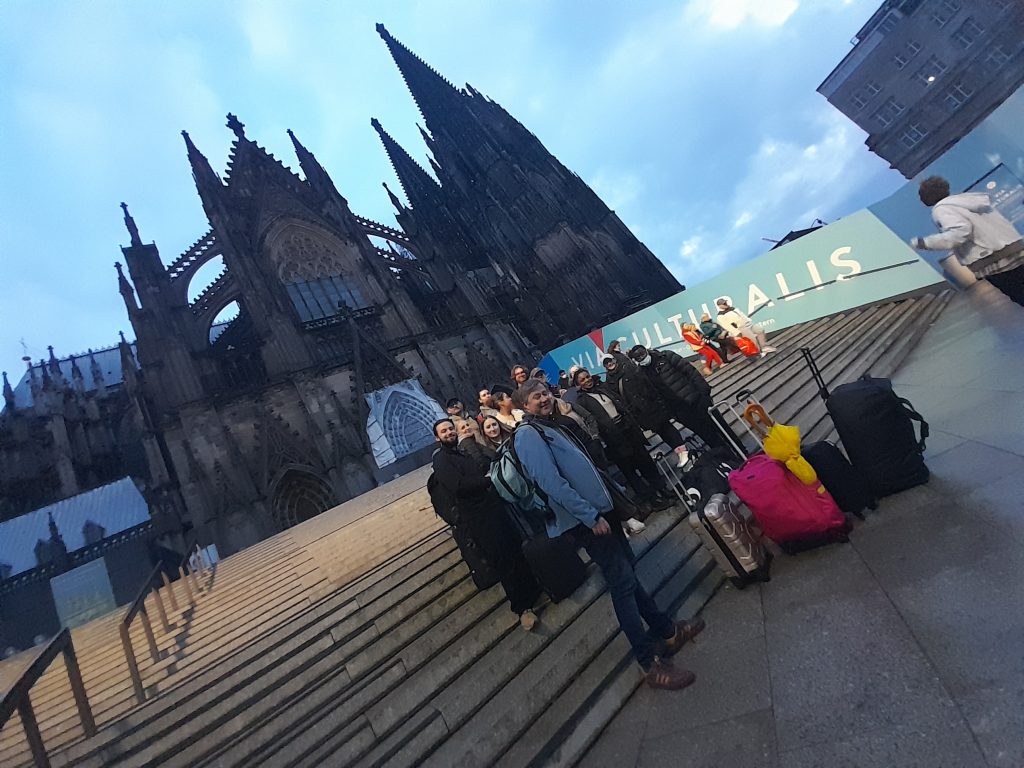
Arriving at Cologne

Arriving at Cologne. Photo: Iryna Kushnir 

In April, I took a group of students to Europe on an enquiry-based learning challenge exploring two themes: Levelling up and Graduate Retention. My role was as their academic mentor which meant two things: Making sure they didn’t miss trains and ensuring they produced a list of suggestions which they would pitch on their return to the Mayor of Mansfield, Andy Abrahams, and Ashfield Independent, Councillor Matthew Relf. They were seeking advice on how to invest in their communities after receiving funding as part of the governments levelling up agenda.

In 2021, the government ranked areas from 1-3 using three categories: the most need for economic recovery and growth, the need for improved transport and connectivity, and the need for regeneration. Mansfield was ranked as the highest priority for support.

101 towns were offered funding as part of the government’s Town Fund proposals. Of this, Mansfield was awarded the lowest at £12.3 million whereas Ashfield received the highest with £62.6 million. Therefore, our trip was an opportunity to have a say in how some of that money might be spent.

My area of expertise is the creative industries and so I was interested in how the arts may help regenerate cities. I was accompanied by Iryna Kushnir who specialises in educational policy and whose focus was graduate retention. Iryna is originally from Ukraine. Just before we were about to head off, Russia invaded her home country.

Our route was created in collaboration with the students with the aim of visiting post-industrial cities who may face similar economic issues as Mansfield and Ashfield. However, we stuck to Northern Europe in anticipation of a refugee exodus into Central Europe. Our route was: Lille, Lens, Cologne, Arnhem, Utrecht, Rotterdam with a quick stop off in Brussels for a Belgium waffle.

In Cologne we visited a cooperative who supported each other through a skill share scheme and whose non-hierarchical structure was similar in principle to the Sumac Centre in Nottingham. From the visit, the students developed a Cycle Cinema idea whereby you could peddle out to remote areas and beam films onto derelict buildings. This had numerous benefits: It kept people fit, was carbon neutral, and helped bring culture to people who may not be able to leave home due to health (elderly) or due to costs (unemployed, refugees).

We visited Utrecht to hear about plans for ‘vertical forests’. Architect and urban planner, Stefano Boeri, has created innovative designs to bring some greenery back to concrete jungles. This is not only visually appealing but helps improve air quality. In the evenings, Utrecht transforms into a ‘Lumen Walk’ whereby buildings are lit up to highlight important historical places or hidden art works. The students loved this and argued that if it could be replicated back home it would create a sense of pride and may encourage repeat visits to the town centre.

In Rotterdam we visited Piet Blom’s ‘Cube Houses’ which are quirky designed homes that optimise space. These are next to Markthal, a sustainable building offering an alternative to the traditional market square, providing homes, office space, and a vibrant indoor market. This clustering of amenities mean you head straight to the market for lunch after visiting the Cube homes. They loved this and said if student accommodation or starter flats looked this impressive, they would have more pride in where they live and be more likely to invite people to visit.

Arnhem also provided lots of inspiration and ideas. At one point, this had lots of problems with anti-social behaviour and so required a radical rethink. One innovation was to create homes above shops so that artisans lived together and built community rather than leaving at 5pm. One immediate impact was they got to know the people causing the anti-social behaviour. They provided support, such as a fashion designer repairing clothes for homeless people and another who sowed stories and quotes from refugees into her clothing to visualise and validate their lives. Crime dropped, people talked to each other, and the area has now become a thriving fashion district.

On our return to the UK, I was contacted by Robert Shore, who had previously commissioned me to produce a programme about Alan Sillitoe for BBC Radio 3 series The Essay. Robert is originally from Mansfield but left for London many years ago to become creative director at Elephant and as deputy editor of Art Review magazine. He had recently started a podcast called Mansfield Is A Town In North Nottinghamshire about the past, present and possible futures of Mansfield and wondered if I had anything I might like to contribute. ‘Funny you should say that,’ I said…

You can listen to the podcast here which I co presented with two of the students from the trip, Tiffany Mayfield and Yianni Chrisodoulou.

Episode 8: Regreening Mansfield

The European Future Towns Challenge was funded by the Erasmus Scheme and organised by NTU Global.


Anthony Burgess: The Ninety Nine Novels podcast

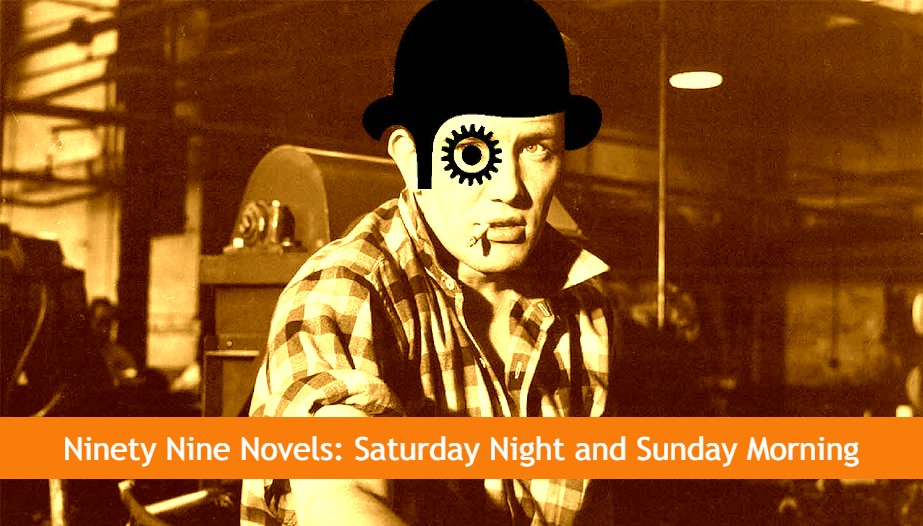
Photo from Karel Reisk collection at BFI.

Anthony Burgess (25 February 1917 – 22 November 1993) was a prolific writer who produced poetry, plays and broadcasts while also building his reputation as a literary critic and linguist. He came pretty late to fiction, turning 39 when Time for a Tiger was published in 1956. Thirty or so novels later, he is best known for his dystopian satire, A Clockwork Orange, which would gain cult status when Stanley Kubrick adapted it for the screen in 1971. This seems a bit reductive, particularly given that he composed over 250 musical works over 60 years. These varied in genre and style and included symphonies, concertos and opera.

Burgess came from a musical family. His mother was a Music Hall singer and dancer and his father played piano. He once wrote: ‘I wish people would think of me as a musician who writes novels, instead of a novelist who writes music on the side’. In this blog I am going to do neither and instead turn to a very specific piece of his non-fiction published in 1984.

Ninety-Nine Novels: The Best in English since 1939 — A Personal Choice is a pretty self-explanatory title and covers a 44-year span between 1939 and 1983, starting with James Joyce and finishing with Norman Mailer. Some authors get two mentions whereas Aldous Huxley pulls off a hat trick with After Many a Summer (1939), Ape and Essence (1948), and Island (1962).

Burgess was a vociferous reader who famously reviewed 350 novels in just over two years at the Yorkshire Post. Presumably he didn’t sleep or eat during that time. His background in journalism and broad knowledge of literature led him to pen Ninety-Nine novels in two weeks. Like all reading lists, it’s intended to provoke discussion and debate – hence the absence of the hundredth novel. ‘If you disagree violently with some of my choices I shall be pleased. We arrive at values only through dialectic’ he writes.

The International Anthony Burgess Foundation in Manchester are currently running a podcast series, with each episode dedicated to a book on the list. I was invited to talk about Alan Sillitoe’s Saturday Night and Sunday Morning (1958). The book was the first Pan paperback to sell a million copies, and like A Clockwork Orange, would forever become synonymous with the author.

In his introduction to Ninety-Nine Novels, Burgess says, ‘I believe that the primary substance I have considered in making my selection is human character. It is the Godlike task of the novelist to create human beings whom we accept as living creatures filled with complexities and armed with free will’. This is certainly true of Arthur Seaton, the charismatic anti-hero of Sillitoe’s debut novel who craves pleasure at every opportunity, no matter who he hurts along the way: “I’m me and nobody else, and whatever people think I am or say I am, that’s what I’m not, because they don’t know a bloody thing about me.”

‘As novels are about the ways in which human beings behave,’ writes Burgess ‘they tend to imply a judgement of behaviour’. What makes Saturday Night and Sunday Morning so authentic is the complete lack of authorial judgement. Sillitoe describes everything as it is. There’s no pandering to sensibilities or fear of moral outrage. This is why publishers originally turned the book down – because they felt the working classes needed a more edifying narrative than the violent environment Sillitoe portrayed. To put this into context, John Braine’s Room at the Top is on Burgess’s list, which Peter Green described as like a ‘vicar’s tea party’ in comparison.

Burgess isn’t completely effusive, describing Sillitoe’s writing as ‘verbose and sprawling, undisciplined’. Although I partly agree with this, I don’t see it as a fault. Sillitoe was a self-taught writer. He didn’t go to university or enrol on a creative writing course. He figured things out for himself. It’s this that gives his writing the rough edges and authenticity.

Some writers are so obsessed with form that you become aware that you’re reading a very well written book. With Sillitoe it’s different. You’re not reading a book. You’re stood at the lathe. You can smell the factory. You can hear people gossiping about you. It’s a different kind of verisimilitude that’s only possible when you write with your ear.

The podcast is hosted by Graham Foster who is the former editor of Transmission. He was one of the first people to publish one of my short stories (The Loneliness of the Dartford Toll Operator) – about a woman who touches 1000’s of hands a day as money is exchanged yet never gets to know anyone on a meaningful level. You can tell it’s an old story (from the mid Noughties) because now there are no toll operators. You have to pay in advance and register your number plate. I found out the hard way last year when I was fined. But that’s another story.

You can listen to the  Ninety-Nine Novels podcast on Soundcloud

International Anthony Burgess Foundation, Engine House, Chorlton Mill, 3 Cambridge Street, Manchester. M1 5BY

This blog was originally published on the Nottingham City of Literature website on 27 June 2022.